 Noctave
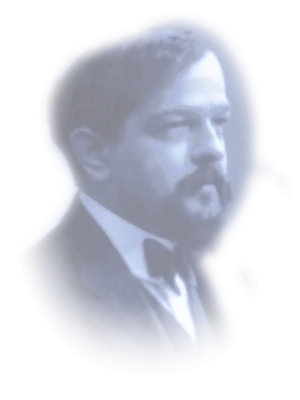
Born in Saint-Germain-en-Laye, Debussy studied at the Paris Conservatoire and won the Prix de Rome in 1884. He wrote the opera Pelléas et Mélisande and, for the piano, Estampes, Images, Children's Corner, two books of Préludes and the Études. His pieces look for new colours in chords, scales and the pedal. Both pieces in the catalogue are early works: the Arabesque No. 1 dates from 1888, Clair de lune from around 1890, published in 1905.
They share a level, but start with the Arabesque. Its triplets pass from one hand to the other and often sit against plain eighth notes: practise these two-against-three passages slowly, hands separately, until the line flows without a bump. Clair de lune, in D-flat major, then asks you to read five flats, to hold chords across much of the keyboard and to judge the pedal so the sound stays clear.