 Noctave
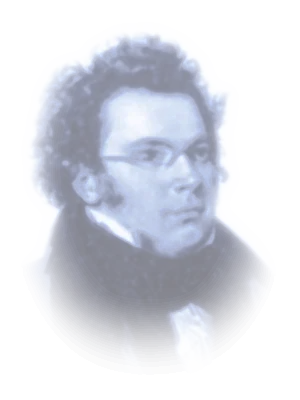
Born in Vienna in 1797, Schubert spent nearly all of his short life there and died at thirty-one. He wrote more than six hundred songs, symphonies, chamber music and, for the piano, sonatas, dances, the Impromptus and the Moments musicaux. Much of his music only became known after his death; the collection Schwanengesang, which includes the Ständchen, was published in 1829.
Start with Moment musical No. 3: a left hand that jumps steadily between bass and chord, and some forty grace notes, to be kept light. The Impromptu in G-flat major comes next. The catalogue follows the key and the 4/2 time signature of the autograph: six flats, a melody to sustain above unbroken arpeggios, and spans of up to seventeen semitones. Keep for last the Ständchen as transcribed by Liszt, where the melody passes from one hand to the other.